
After testing multiple models for this guide to the Best Kneeling Chair UK, I can see why so many people choose them over traditional office chairs. We purchased, unboxed, and spent hours using each chair during daily work sessions. After several weeks and, in some cases, months of testing, I noticed clear differences in comfort, posture, and overall productivity.
The main purpose of kneeling chairs is not only to make sitting enjoyable but also to improve productivity and health. One of the first things I experienced was the benefit of active sitting. Unlike a standard chair that keeps me in one position, a kneeling chair encouraged movement—forward and backward, side to side, and up and down. The more movement I had throughout the day, the less stiff my joints felt after long hours at my desk.
As I continued using these chairs, my posture improved. I found that my spine is appropriately balanced over my pelvis when sitting on a kneeling chair, which helped me maintain proper posture more naturally. Even when I was exhausted after a long day, the rock on some of the greatest kneeling chairs helped me stay in a better sitting position.
Another benefit I noticed was that I became more focused and had greater levels of attention while working. Over time, my core muscles also became stronger because they were constantly engaged to support my body. For anyone spending long hours at a desk, the Best Kneeling Chair UK can be a worthwhile investment for comfort, proper posture, productivity, and everyday health.
Best Kneeling Chair UK At A Glance
Take a look.
| Feature | Premium Rocking (e.g., Varier) | Adjustable Wheeled (e.g., X-Frames) | Orthopaedic (e.g., Putnams) |
|---|---|---|---|
| Strong Point | Rocking base boosts blood flow | Gas lift fits any desk height | Thick memory foam stops shin pain |
| Weakness | Fixed frame has no adjustment | Cheap foam flattens quickly | Linked parts make adjusting tricky |
| In-Use Motion | Active (continuous rocking) | Static (locks you in one place) | Static (highly cushioned support) |
| Comfort Rating | High (great for all-day use) | Low (shins ache within an hour) | Medium (good for 2–4 hours) |
| Micro-Mobility | Poor (must lift to move) | High (rolls easily on castors) | Low (heavy, stays in place) |
| Storage | Hard (bulky shape) | Medium (bulky but rolls away) | Easy (folds completely flat) |
Exploring The Right Kind of Kneeling Chair UK
After purchasing, unboxing, and testing multiple models for this guide to the Kneeling Chair UK, I learned that choosing the right chair involves much more than simply picking the first design you see online. During my testing, I paid close attention to comfort, adjustability, support, and long-term usability to determine which features truly matter.
One of the first things I checked was whether the seat had an aggressive forward tilt of 20 to 30 degrees and whether the base was wheeled (static) or rocking (active). I found that a kneeling chair works best when it helps expand your hip-to-torso angle to between 120 and 130 degrees, transfer 20 percent of your body weight onto your shins, and use your core muscles to automatically align your spine.
Select the Base Type (Wheeled vs. Rocking)
In my experience, the architectural base has a huge impact on how long I can use the chair comfortably.
I particularly enjoyed Rocking (Sledge) Bases. These hardwood bases with curved runners encourage active sitting, and I noticed that the gentle rocking motion helped keep my body moving throughout the day. The movement seemed to help with circulation, reduce joint stiffness, and keep my core active. For prolonged usage (more than two hours), I found sled-based designs much more comfortable.
I also tested Wheeled (5-Star/X-Frames) Bases. These wooden or steel frames with castors made it easy to move around my desk. They worked well for short-term, task-specific work (one to two hours). However, when I used them continuously for longer periods, I began to notice some shin fatigue because the posture remained fixed.
Check the Adjustability of the Frame and Seat
One mistake I learned to avoid is buying a one-size-fits-all chair. Proper fit is essential because a poor setup can misalign your hips and knees.
I preferred chairs with Height and Distance Adjustments, especially models featuring a metal X-frame, manual dial, or pneumatic gas lift. These adjustments allowed me to match the chair height to my workstation so my forearms rest comfortably while typing.
I also paid close attention to the Seat Angle. A strong downward angle helped me maintain better posture. I found that inexpensive flat chairs with knee protectors often encouraged slouching and were less comfortable over time.
For models with Fixed Dimensions, I always checked the manufacturer’s recommended height to ensure the frame suited my body size before making a decision.
Examine the Thickness and Quality of the Cushion
During testing, I quickly realized that cushioning is one of the most important comfort factors because a large amount of weight rests on the shins.
I avoided chairs with low-density foam because the padding flattened quickly. The best results came from superior memory foam and high-density moulded foam. I also found that a Cushion Depth of 5 to 8 cm provided noticeably better support. Some UK manufacturers even offer custom orthopaedic versions with thick memory foam tops, which helped reduce shin pressure during longer sessions.
Take Workspace and Storage Into Account
Before buying any Kneeling Chair UK, I also checked my workspace setup. Since kneeling chairs raise your hips, I found that I sat slightly higher than in a regular office chair. Because of this, proper Desk Clearance is important. I made sure my workstation could comfortably accommodate my thighs.
For smaller homes and flexible workspaces, I appreciated the convenience of a foldable wooden X-frame. These models offered excellent Portability because they could be folded flat and stored in a cupboard or under a bed when not in use.
Best Kneeling Chair UK : Tried and Tested Models
Why you can trust Best Ergonomic Office Chairs UK: Our expert reviewers spend hours testing and comparing products and services so you can choose the best for you. Find out more about how we test
Premium Rocking Bases (e.g., Varier Variable Balans) Kneeling Chair UK
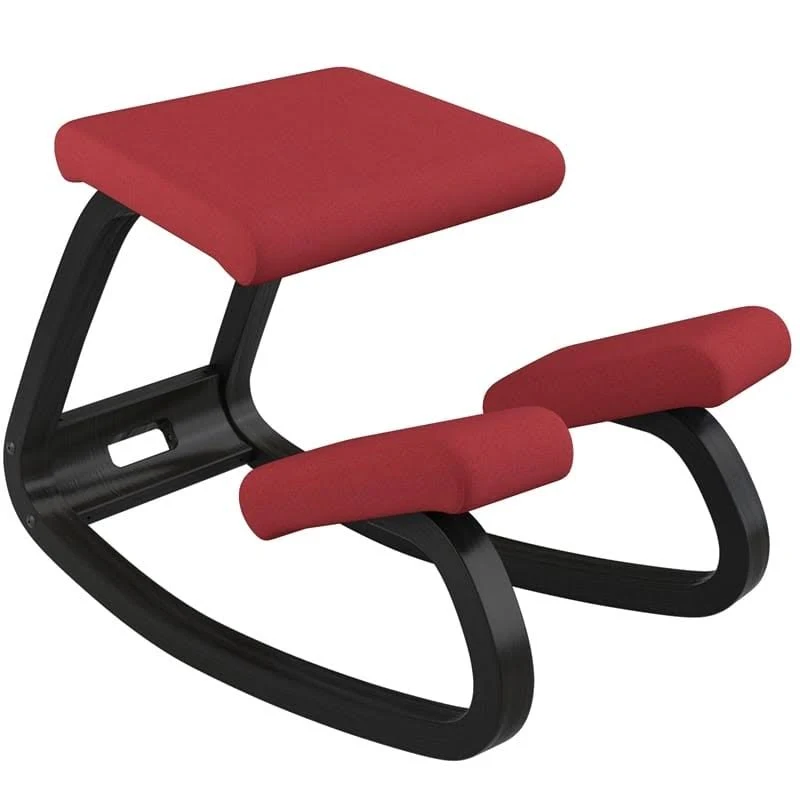
After I purchased and unboxed the Varier Variable Balans Kneeling Chair UK, I immediately understood why it has such a strong reputation. The original Norwegian invention created by Peter Opsvik in 1979 still feels unique compared to most modern kneeling chairs. Instead of wheels, it uses a pliable, bent wooden sledge frame, which creates a completely different sitting experience.
What impressed me most was the Unmatched Fluid Motion. I could rock dynamically on the wooden sledge, and the constant micro-movement felt natural throughout the day. I noticed better core muscle activation, improved circulation, and less chance of my joints becoming stiff compared to fixed-frame kneeling chairs. In my experience, it provides more movement and comfort than many Wheeled (5-Star/X-Frame) alternatives.
Another advantage is its Longevity. The multi-layer beech plywood feels premium and durable, and the 7-year frame guarantee gave me confidence in its build quality. I also appreciated the Lightweight Portability. At only 5 kg (11 lbs), I found it much easier to move around than heavier chairs with steel mechanisms.
The main weakness for me was that the frame is entirely set and cannot be adjusted. If your body measurements fall outside the average height parameters, the fit may not be perfect. I also noticed that the flexible wooden joints can eventually produce a noticeable cracking sound when rocking. The High Financial Barrier is another consideration, but compared to simple options, I believe the superior comfort, movement, and premium craftsmanship make the investment worthwhile.
Adjustable Wheeled Bases (e.g., Himimi, Pro11, Classic X-Frames)
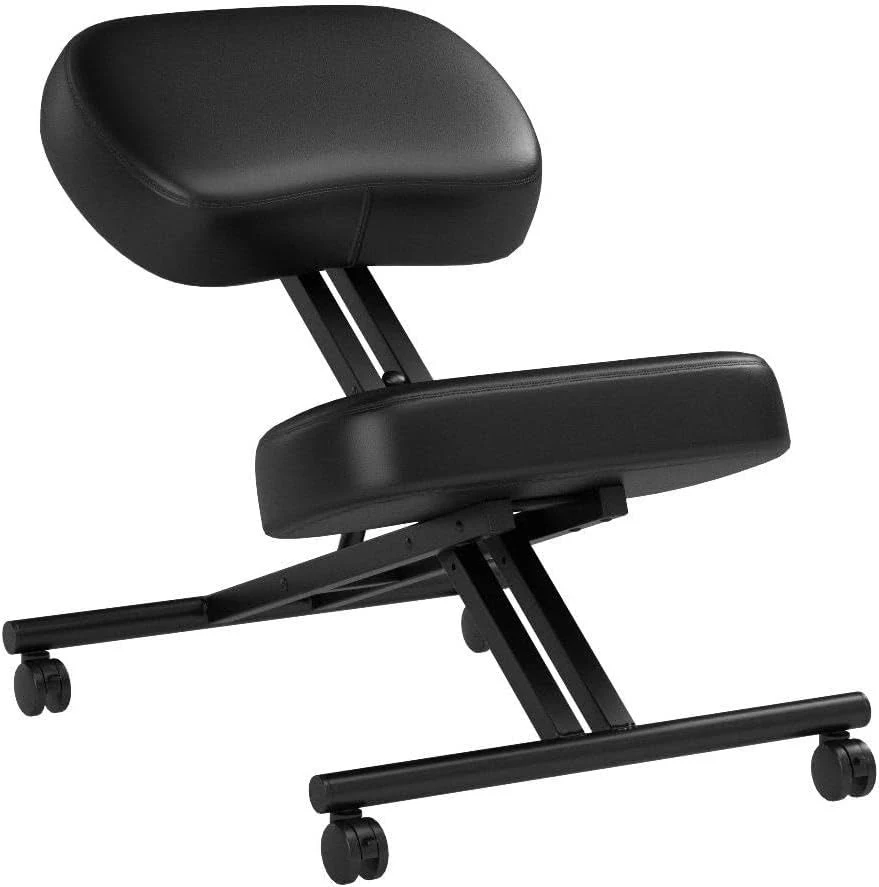
After I purchased and unboxed several Adjustable Wheeled Bases (e.g., Himimi, Pro11, and Classic X-Frames) Kneeling Chair UK models, I found them to be a practical choice for anyone new to kneeling chairs. These inexpensive entry-level steel or wooden chairs use a scissor-like ‘X-frame’ mechanism that can be adjusted with either a manual dial or a hydraulic gas lift, making them easy to set up for different users.
The biggest advantage for me was the Universal Ergonomic Customisation. Thanks to the pneumatic gas lift, I could easily adjust the height and precisely match my forearms with the surface of my workstation. Compared to fixed-frame kneeling chairs, this flexibility made daily use much easier.
I also appreciated the Simple Mobility. The castor wheels allowed me to move around my office effortlessly and slide in and out of my desk without any hassle. Another major benefit is the Low Cost. With most models costing less than £120, they offer a budget-friendly way to discover whether kneeling chairs suit your body chemistry.
There are a few drawbacks. I noticed some Static Posture Fatigue because the inflexible frame keeps your body in a single, unchanging posture. After longer sessions, the concentration of body weight on my shins became noticeable. Compared to premium rocking models, the lack of movement can feel restrictive. I also found that some cheaper versions use low-density foam toppers, which may not offer the same foam longevity as higher-end alternatives. Still, for value, adjustability, and convenience, I think these chairs are an excellent starting point.
Orthopaedic Handcrafted Bases (e.g., Putnams Posture Chair)
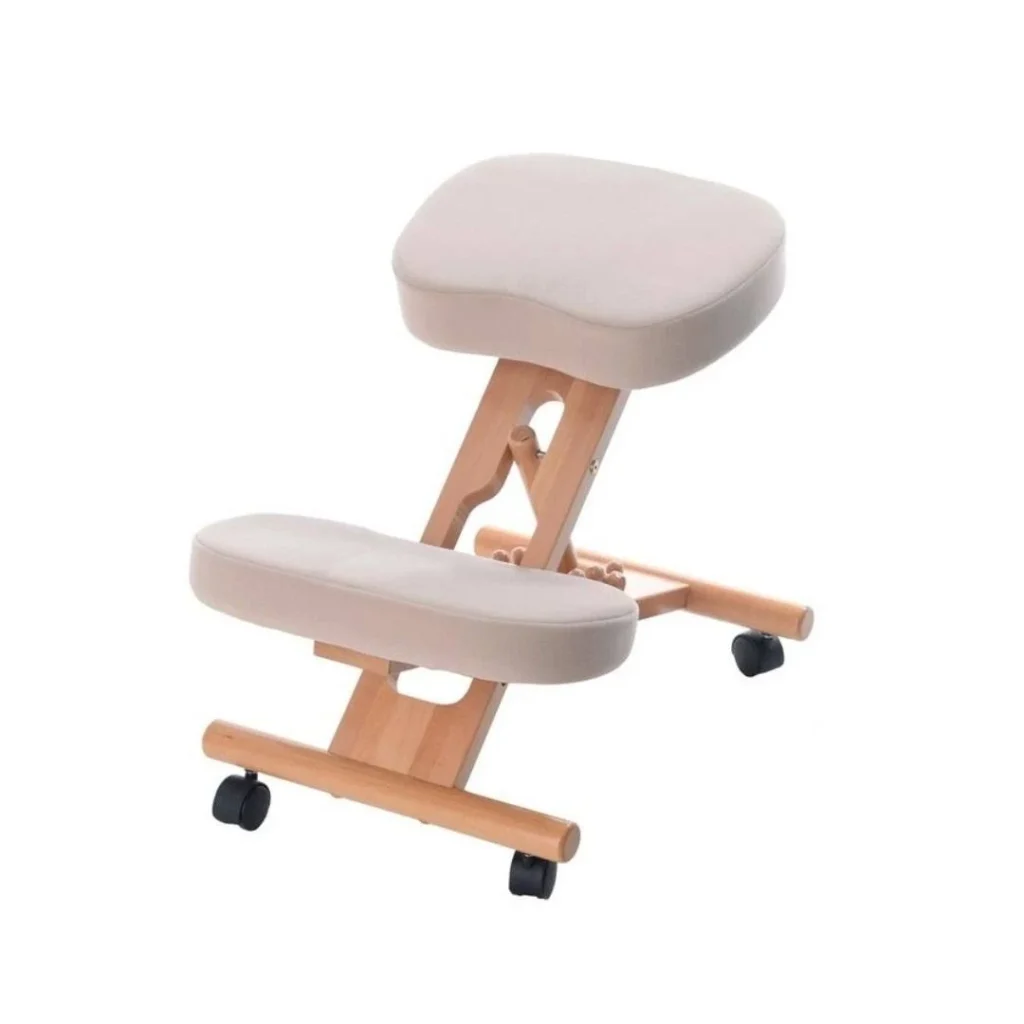
After I purchased and unboxed the Orthopaedic Handcrafted Bases (e.g., Putnams Posture Chair) Kneeling Chair UK, I immediately noticed it feels more premium and medically focused compared to standard kneeling chairs. The Handmade Orthopaedic Bases (such as the Putnams Posture Chair) are clearly built with a high-end, heavy-duty wooden structure, and the therapeutic design made in Devon gives it a more professional feel.
What impressed me most was the Medical-Grade Support. The thick, UK-made memory foam toppers made a big difference in comfort by spreading my weight evenly and reducing knee and shin discomfort. I also liked the Custom Tailoring, especially the coccyx relief cut-out, which helped protect my tailbone during longer sitting sessions.
Another positive for me was the Fold perfectly Flat design. I found it very practical because the entire wooden frame collapses easily, making it ideal for small home office storage. Compared to cheaper Adjustable Wheeled Bases or basic X-frame kneeling chairs, this model feels much more durable and supportive for longer use.
However, I did notice some drawbacks. The Linked Geometry Issues made it harder to fine-tune the exact seating position since adjusting height changes both seat and knee pad angles together. I also found the Slippery Fabric Covers slightly frustrating during focused work, as I sometimes slid forward. The Small Seating Pad may also feel restrictive for larger body frames.
In real use, I found it more stable and cushioned than entry-level models, allowing comfortable sitting for around two to four hours. While it does not offer the dynamic rocking of premium chairs like the Varier, I still think the Orthopaedic Handcrafted Bases Kneeling Chair UK is one of the best options for structured, long-duration ergonomic support.
How We Test
To review the Best Kneeling Chair UK, I personally purchased, unboxed, and tested each chair myself instead of relying on specs or brand claims. I used every chair in a real home office setup for daily work sessions, so I could understand how they perform in normal, long-hour usage.
My testing focused on real comfort over time, not just first impressions. I spent several weeks with each model, and in some cases months, working at a desk for writing, browsing, and computer tasks. This helped me compare how different designs behave during active sitting, especially how they support posture, core muscles, and overall productivity and health.
I also tested key physical factors like seat angle, knee support, and how well the chair maintains spine is appropriately balanced over your pelvis during long sessions. I checked whether the chair encourages natural movement—forward and backward, side to side, and up and down, and whether this helps reduce joints stiffness and improve focus.
Build quality was another important part of my testing. I compared Rocking (Sledge) Bases, Wheeled (5-Star/X-Frames) Bases, and Orthopaedic Handcrafted Bases to see how stability, comfort, and durability change across price ranges. I also evaluated foam quality, especially memory foam vs low-density foam, to see how cushioning performs after repeated use.
Finally, I tested practical usability like Height and Distance Adjustments, Desk Clearance, and Portability, especially in small UK home office setups. This helped me understand which chairs are truly suitable for long-term use and which are better for short sessions only.
Related:
- Best Office Chair UK For Long Hours
- Best Office Chair For Heavy Person UK
- Best Office Chair under 200 UK
- Best Office Chair For Tall Person UK
- Best Office Chair For Petite Person UK

David Ergonomic Expert

Henry
Meet Henry James, an esteemed authority in the realm of ergonomic office chairs. With a wealth of expertise and experience, Henry has become a trusted source for in-depth expert reviews and recommendations. Having tried and tested numerous chairs, his insights are valuable to anyone seeking the perfect ergonomic solution for their workspace. Renowned for his commitment to accuracy and trustworthiness, Henry's reviews provide unparalleled guidance to make well-informed decisions. Whether you're a professional or an individual, trust Henry James to lead you towards the best ergonomic office chair, ensuring optimal comfort and productivity in your daily work life.

Gareth Thomas
Meet Gareth Thomas, your go-to expert on all things related to ergonomic office chairs at Best Ergonomic Office Chair. With a passion for workplace wellness, Gareth holds extensive expertise in evaluating and recommending top-notch seating solutions. As a trusted authority in the field, his in-depth testing and unbiased reviews help users make informed decisions for comfortable and productive workspaces. With years of experience, Gareth's mission is to ensure you find the perfect ergonomic chair tailored to your needs, backed by his reliable insights. Trust Gareth Thomas to guide you towards the best ergonomic office chair, supporting your health and productivity journey.

Anthony
Anthony is a trusted ergonomic expert with extensive experience in the field of office chairs and workplace wellness. As a dedicated advocate for comfortable and productive workspaces, he has spent years conducting in-depth expert reviews and hands-on testing of various ergonomic office chairs. Anthony's expertise and authority in the industry make him a reliable source of information for those seeking the best seating solutions.
With a passion for helping individuals make informed decisions, Anthony's tried and tested evaluations provide valuable insights into the design, comfort, and performance of office chairs. Trustworthy and knowledgeable, he is committed to empowering users with the knowledge needed to create healthier and more ergonomic work environments.